

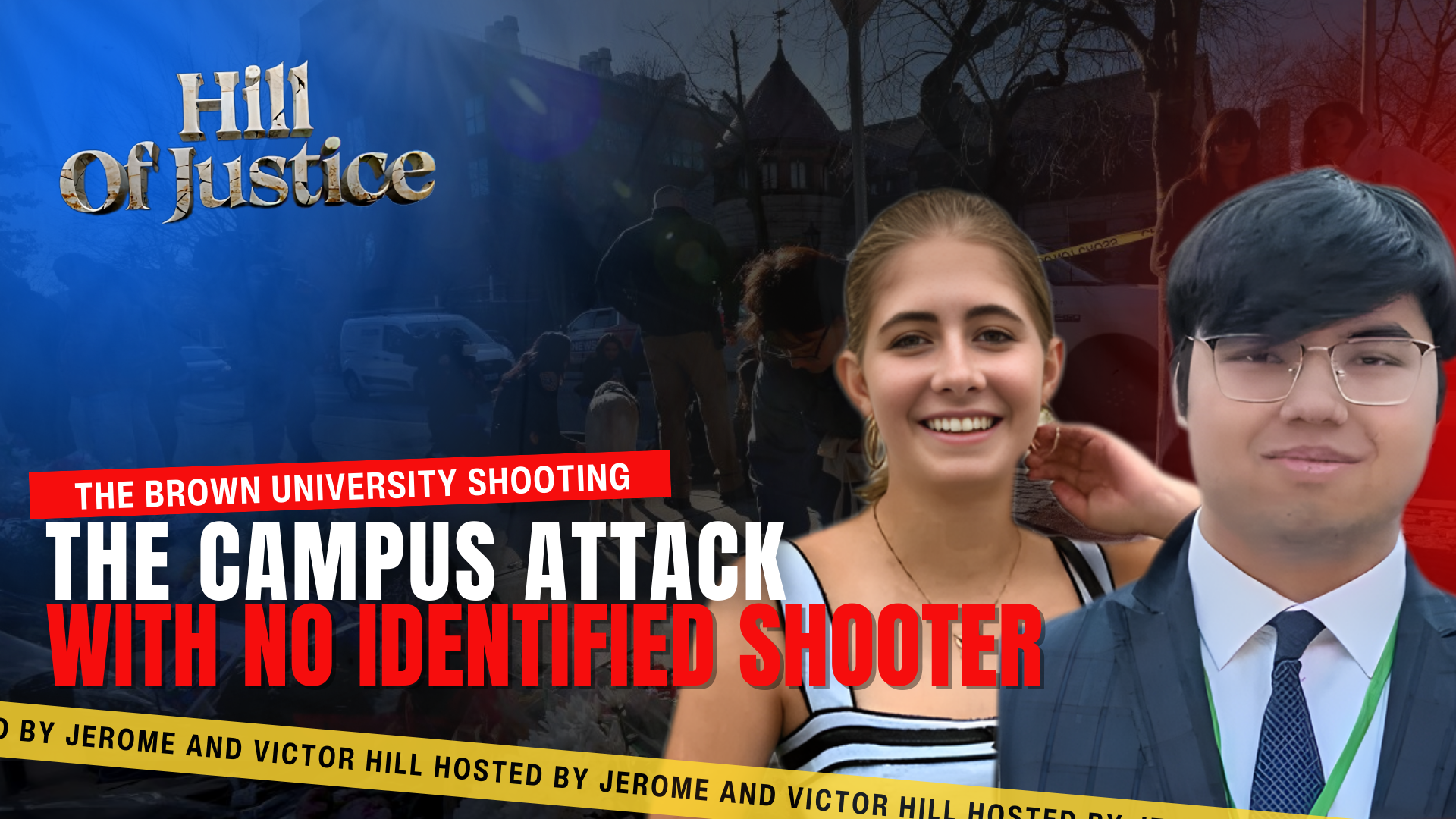
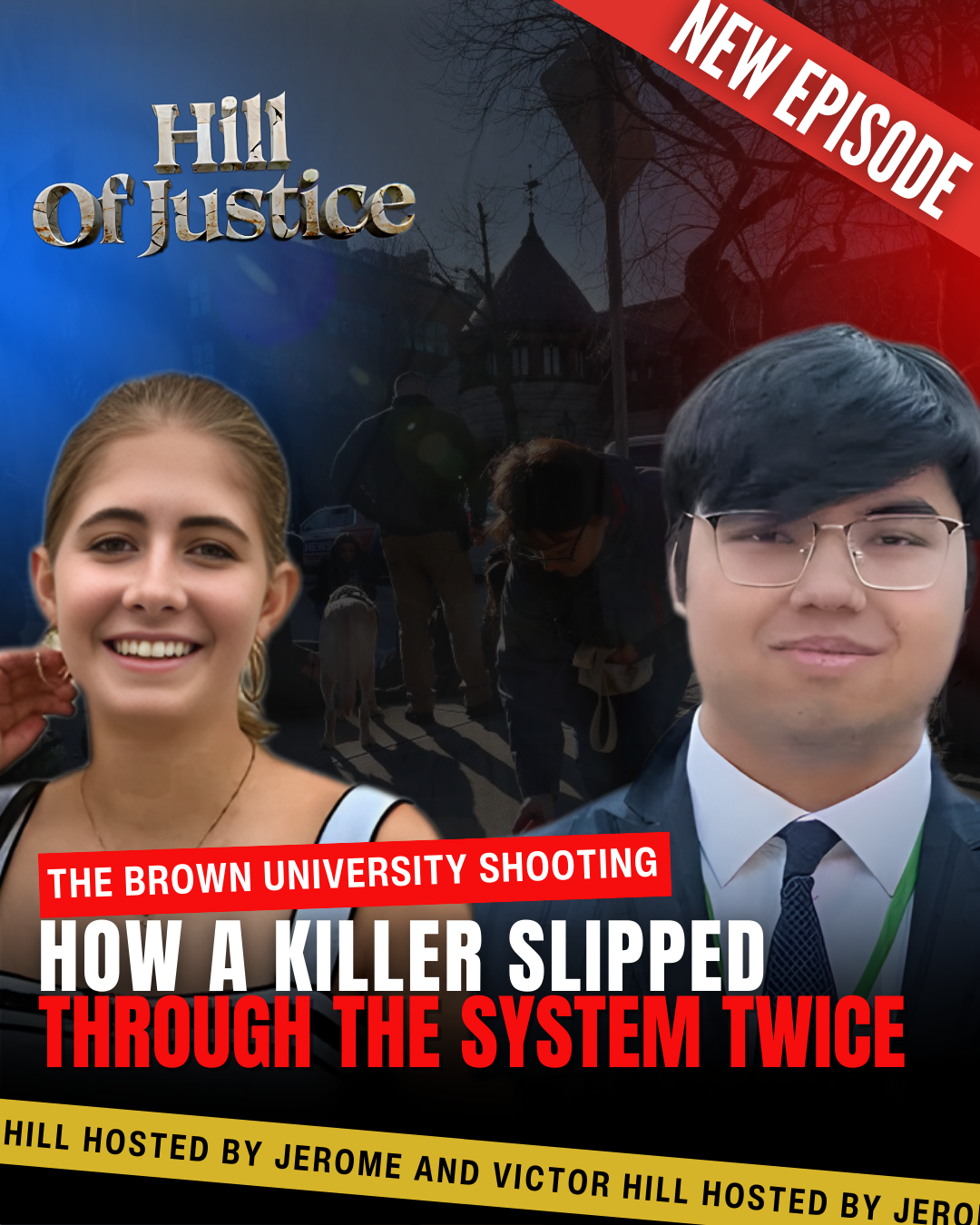
Two Students Dead. Nine Wounded. And a Shooter Who Walked Away.
When an active shooter leaves the scene alive, unidentified, and untracked, it is not just a failure of circumstance. It is a systemic threat.
In this episode of Hill of Justice, we examine one of the rarest and most unsettling active-shooter investigations in U.S. history. A case where the offender did not barricade, did not surrender, did not die by suicide, and did not leave behind answers.
He vanished.
Snow covered his tracks. Time diluted witness memory. And silence replaced certainty.
What unfolded next placed Brown University at the center of a national security dilemma that law enforcement is still struggling to fully resolve.
The Shooter Who Walked Away
Two students were killed.
Nine more were wounded.
And the offender calmly exited the scene.
This alone separates the case from nearly every campus shooting in modern history. Most offenders are stopped by police, killed at the scene, or identified within hours. This shooter did none of those things.
He planned for escape.
Two Dead. Nine Wounded. No Suspect.
In the immediate aftermath, investigators faced a scenario they train for least: mass casualties with no offender in custody and no confirmed identity.
This was not chaotic gunfire. The attack showed control, restraint, and intention. Victim selection, movement patterns, and exit timing suggested a person who understood how panic spreads—and how law enforcement responds to it.
That realization changed everything.
Why the FBI Released Video With No Name
Releasing surveillance footage without naming a suspect is an admission of uncertainty.
It signals that investigators do not trust their own theory enough to anchor the public narrative. Tips become both an asset and a liability. For every useful lead, hundreds of false accusations follow.
Law enforcement had to choose between silence and risk. They chose risk.
The False Confidence Trap
Pressure to “solve” a case often leads to the most dangerous mistake investigators can make: arresting the wrong person.
Hill of Justice breaks down how confirmation bias, public demand, and political urgency can converge into catastrophic misidentification. In this case, restraint may have prevented a wrongful arrest—but it also prolonged fear.
The public wants certainty. Investigations require patience. Those two forces rarely align.
What Made This Shooter Different
This offender did not seek attention.
He did not leave a manifesto.
He did not call the media.
He did not linger.
Instead, he behaved like someone trained to disappear.
That behavior raised concerns far beyond a single incident. Investigators were no longer just searching for a suspect. They were assessing whether they were dealing with a mobile, disciplined threat capable of repeating the act elsewhere.
The Pre-Attack Walk
Security footage revealed something chilling: a reconnaissance phase.
Before the shooting, the suspect was seen moving through campus deliberately. Studying paths. Evaluating lighting. Observing security presence. Snowfall aided him, obscuring footprints and blending his movement into the environment.
This was not improvisation. It was preparation.
Inside the Planning
Investigators noted details most civilians miss:
-
Controlled pacing
-
Efficient weapon handling
-
Absence of emotional leakage
-
A clean exit route
These are not common traits in impulsive offenders. They point to someone who rehearsed—not just the attack, but the escape.
Why the Security System Failed
No campus advertises its vulnerabilities, but this case exposed familiar weaknesses.
Camera blind spots.
Delayed threat recognition.
Systems designed for documentation, not prevention.
Technology does not stop violence. People do. And people can be outmaneuvered.
Could the Shooter Have Taken His Own Life?
Investigators considered it. They had to.
But there was no body. No weapon recovery. No definitive signal that the threat had ended. In high-risk investigations, hope is not evidence.
Without confirmation, the possibility of re-emergence remains.
The Three Endgame Scenarios
As days passed, investigators narrowed their fears to three outcomes:
• The shooter left the jurisdiction entirely
• The shooter blended back into everyday life
• The shooter was planning another attack
None of these scenarios offer comfort. All of them demand vigilance.
Why This Case Still Matters
This is not just a story about a campus shooting.
It is a warning about how violence is evolving.
Some offenders no longer want notoriety. They want invisibility. And that makes them exponentially harder to stop.
This case will influence how campuses assess threats, how law enforcement balances speed with accuracy, and how the public understands danger in the absence of answers.
Because the most unsettling question remains unanswered:
Where did he go?
🎧 Listen to the full episode of Hill of Justice
Available on Apple Podcasts, Spotify, iHeartRadio, and all major platforms
📌 Subscribe for unfiltered discussions on law, justice, and the realities behind the headlines
📲 Follow @HillOfJustice
🎬 Produced by Juming Delmas Studios
🔗 https://www.jdelmasstudios.com
Be the first to leave a comment