
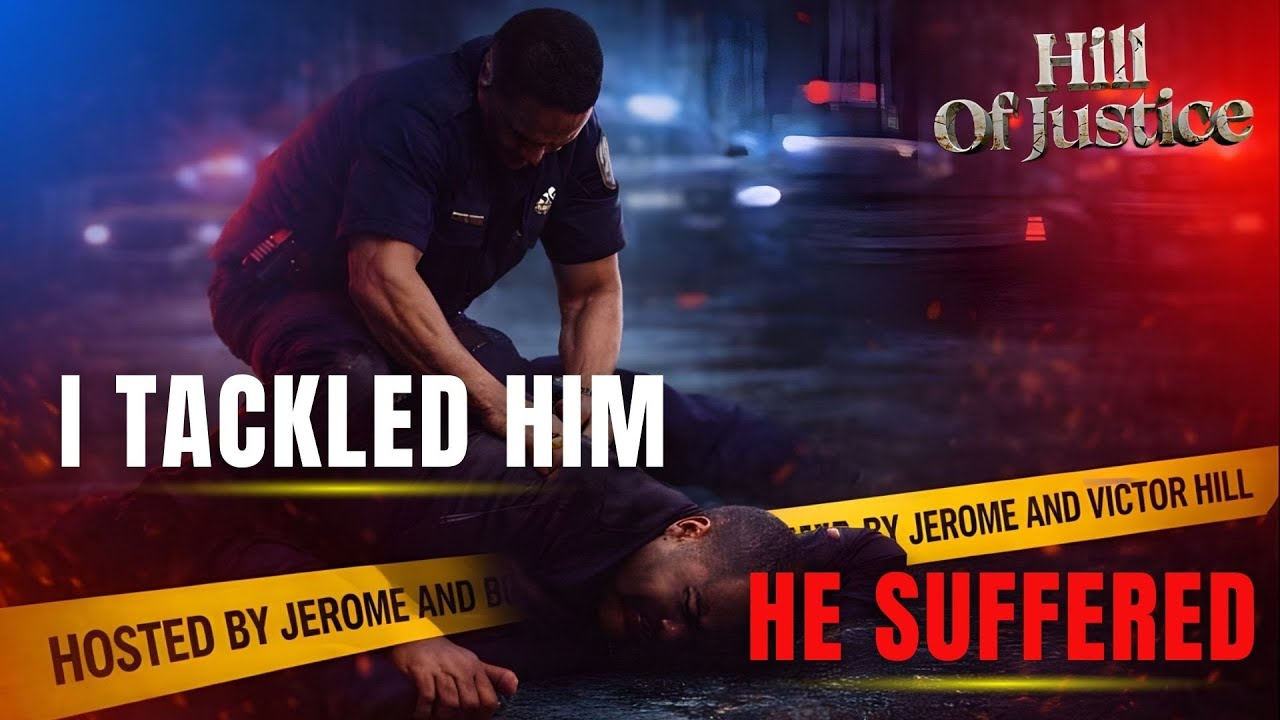
I Followed My Training. The Suspect Died. Would the System Protect Me Today?
This Episode
In this episode, Jerome Hill recounts a terrifying personal experience involving a suspect who died in his custody following a foot chase and physical struggle. The hosts use this incident to explore the dangerous gap between police training and public perception. Additionally, they engage in a spirited debate regarding “Quality of Life” policing—disagreeing on whether targeting minor offenses is an effective strategy for controlling violent crime in major cities.
The Incident: A Routine Stop Turned Deadly
Jerome shares a story from his time on a “crime suppression” detail, a unit tasked with enforcing low-level offenses to disrupt larger criminal activity.
• The Encounter: Jerome stopped a man in an alleyway who was in possession of two gel caps of heroin. While being arrested, the suspect fled, leading to a foot chase through yards and alleys.
• The Use of Force: During the chase, Jerome lost sight of the suspect’s hands. Fearing the suspect might have a weapon, Jerome tackled him. When the suspect refused to release his hands from under his body, Jerome used strikes to gain compliance and handcuff him.
• The Death: Moments later, EMS arrived, but the suspect died before reaching the hospital. Jerome was left terrified, believing his strikes might have killed the man.
• The Truth Revealed: The autopsy later exonerated Jerome. The suspect had a severe heart condition (four stents) and was medically forbidden from physical exertion. His heart had “exploded” from the run, and what Jerome interpreted as resistance was actually a “death clench” caused by heart failure.
Expert Analysis: The “Monday Morning Quarterback” Problem
The hosts discuss how this specific incident would play out differently in today’s political climate.
• Indictment via Optics: Jerome argues that if this happened today and was caught on body camera, he would likely be indicted for murder before the medical facts were known. The video would show an officer striking a man who then died, leading the public and “Robert Ford prosecutors” to assume the strikes caused the death.
• Intent vs. Outcome: Victor Hill emphasizes that officers are trained to strike when a suspect resists handcuffing. However, the public often judges the outcome (death) rather than the intent (compliance), ignoring that the officer had no way of knowing the suspect’s medical history.
• The “Villain” Narrative: The hosts argue that society has shifted to a mindset where a suspect’s criminal actions are ignored, and the officer is automatically cast as the villain if force is used.
Strategic Debate: “Quality of Life” Policing
The episode features a strong disagreement between the hosts regarding police strategy.
• Victor’s Stance (The Magnifying Glass Theory): Victor argues for “occupying territory.” By cracking down on minor issues like loitering and loud music (“quality of life” issues), police can make drug corners inoperable. He believes that placing a patrol car on a corner 24/7 is more effective than chasing “kingpins,” because if dealers cannot operate, they leave.
• Jerome’s Stance (The Big City Reality): Jerome contends that while this works in suburbs or small zones, it is impossible in massive, complex cities like Baltimore due to sheer volume and lack of manpower. He argues that using high-level detectives for minor ticket writing feels like a waste of resources.
Key Takeaways & Systemic Realities
1. The Danger of De-Contextualized Video
Video evidence can be misleading. In this case, a “death clench” looked like resisting arrest. Without the autopsy results, the visual evidence would have falsely condemned the officer for police brutality.
2. “Broken Windows” Policing is Controversial but Effective
Victor insists that enforcing small laws prevents big crimes. He compares it to McDonald’s: if you block the drive-thru (the street corner), they can’t sell Big Macs (drugs), and the business collapses. This method clears neighborhoods but is often disliked by “high-speed” officers who prefer executing raids.
3. The Fear of Prosecution
The hosts warn that when prosecutors indict officers for “aggravated assault” over accidental injuries during an arrest, officers stop doing their jobs. This hesitation empowers criminals and ultimately leads to higher crime rates in vulnerable communities.
Conclusion
This episode highlights the fragility of a police officer’s career and freedom. The hosts conclude that the justice system currently lacks the patience to wait for facts (like an autopsy) before destroying an officer’s reputation. As Victor Hill notes, true crime suppression requires seizing territory and sweating the small stuff, but this requires political backing that many modern departments no longer have

Be the first to leave a comment