Cincinnati, Ohio
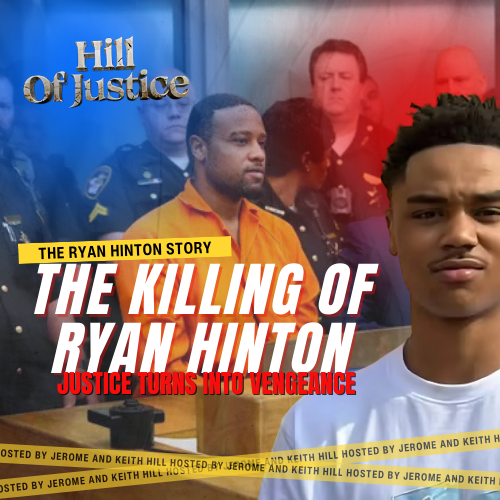
Two deaths, twenty-four hours apart, in Cincinnati. On May 1, 2025, a police officer shot and killed 18-year-old Ryan Hinton during a foot pursuit. The next day — roughly two hours after watching the body-camera footage of his son’s death — Ryan’s father, Rodney Hinton Jr., allegedly drove deliberately into Hamilton County Special Deputy Larry Henderson, killing him. Deputy Henderson had no involvement of any kind in Ryan’s death.
Hill of Justice covers this as one interlocking case: a police shooting whose justification turns on a split second, a grieving father’s alleged act of violence against an uninvolved officer, and the institutional decisions — how bodycam footage is shown to families, how hearings become spectacles — that poured fuel on all of it.
Established Officers responded to a stolen-vehicle report at a condominium complex; four occupants fled on foot, Ryan Hinton among them. Established Body-camera audio captures an officer shouting “Gun! Gun!” before firing; Ryan was shot twice and died at the scene. Established Investigators say a loaded firearm was recovered at the scene, allegedly in Ryan’s possession. Alleged Whether Ryan pointed the gun at the officer — the officer’s stated reason for firing — is the case’s central disputed fact; per HOJ’s review, the footage is not clear enough to independently confirm it. The legal framework is Tennessee v. Garner: deadly force against a fleeing suspect requires an immediate threat.
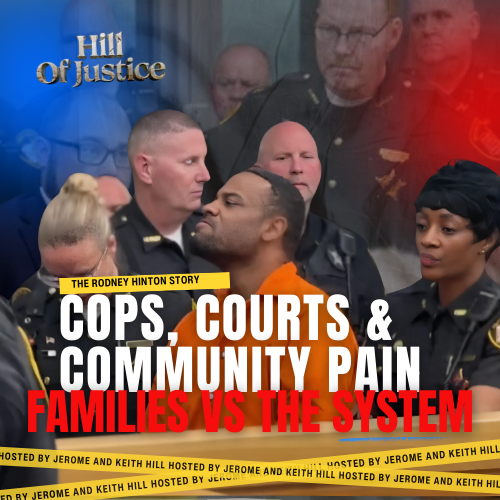
Established On May 2, 2025 — graduation day near the University of Cincinnati — Rodney Hinton Jr. allegedly drove his car intentionally into Deputy Larry Henderson, a 33-year veteran working traffic as a special deputy after retirement. Henderson died. Established Hinton was charged and held without bond; sheriff’s deputies packed the courtroom at his first appearance. Established Deputy Henderson was not involved in Ryan Hinton’s death.
Hill of Justice analysis: showing a father his son’s death on bodycam — without grief counselors, clergy, or family support present — and releasing him into the world two hours before the deputy was struck was an institutional failure layered onto a tragedy. The packed-courtroom arraignment compounded it: a security-driven remote hearing would have served justice without the spectacle. None of that analysis excuses the act; it explains the machinery around it.
— May 1, 2025: Cincinnati officer fatally shot Ryan Hinton, 18, during a foot pursuit following a stolen-vehicle report; four occupants had fled the vehicle.
— Bodycam audio captures "Gun! Gun!" before shots; Ryan was shot twice and died at the scene.
— Investigators recovered a loaded firearm at the scene, allegedly in Ryan's possession.
— May 2, 2025: Rodney Hinton Jr., after viewing the bodycam footage with police, allegedly drove deliberately into Special Deputy Larry Henderson (33-year Hamilton County veteran) directing graduation traffic; Henderson died.
— Deputy Henderson had no involvement in Ryan Hinton's death.
— Hinton was charged and held without bond.
— Per public reporting: capital charges were later dismissed; Hinton entered a plea of not guilty by reason of insanity following a bipolar-disorder diagnosis by a court-appointed expert; trial is set for October 5, 2026.
— Whether Ryan pointed the firearm at the officer (the stated justification) — the footage reviewed in coverage is not conclusive.
— The final determination on the officer's use of force.
— The outcome of Rodney Hinton's trial and the insanity defense.
The justification for the shooting: the officer's account (gun pointed, immediate threat) versus what the unclear footage can independently establish. HOJ's analysis holds both truths at once — an officer's split-second perceived threat can be legally sufficient, and "I feared for my life" cannot be an automatic case-closer. The investigation's conclusion belongs in this file when it lands.
Two Hill of Justice critiques stand out:
1) The bodycam viewing: showing a father his son's death without grief counselors, clergy, or family support — then losing track of him — preceded the deputy's killing by roughly two hours. HOJ's position: family viewings should happen in a supported environment, full stop.
2) The courtroom: packing the arraignment with deputies turned a hearing into a confrontation. A remote hearing would have protected everyone — including the integrity of the process.
Context from coverage: Cincinnati's family-viewing practice traces to consent-decree-era transparency reforms following earlier police-shooting controversies.
The shooting: Tennessee v. Garner (1985) governs — deadly force against a fleeing suspect requires an immediate threat to the officer or others; a firearm in hand materially changes that calculus, and the pointed-vs-possessed distinction is where this case lives.
The deputy's killing: charged as an intentional vehicular homicide of a law-enforcement officer; capital exposure was later removed, and the defense is now insanity — putting Rodney Hinton's mental state at the moment he accelerated at the center of the October 2026 trial.
Per public reporting: capital charges dismissed; not-guilty-by-reason-of-insanity plea entered after a bipolar-disorder diagnosis; trial scheduled for October 5, 2026 after three delays. This file updates as the trial proceeds.